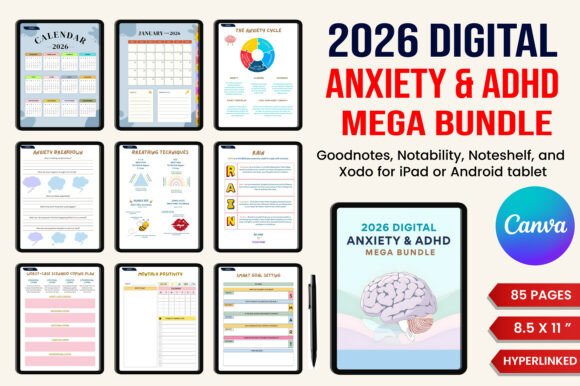
2026 Digital Anxiety ADHD Mega Bundle
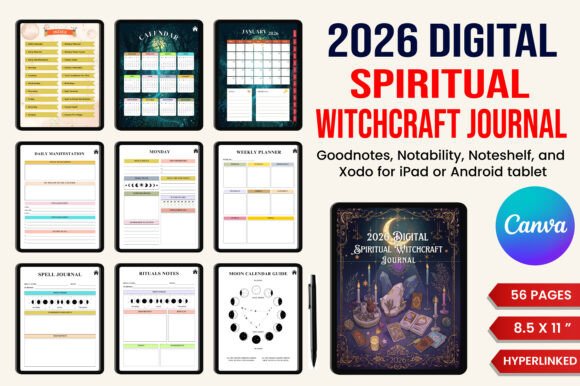
The 2026 Digital Anxiety ADHD Mega Bundle is a comprehensive digital planner designed to support individuals managing anxiety, ADHD, and emotional regulation. It is not clinical treatment, but rather a structured, self-guided resource that integrates evidence-informed strategies—such as exposure therapy principles, cognitive-behavioral techniques, mindfulness practices, and behavioral activation tools—into daily planning and reflection formats. Built for use with compatible apps (e.g., GoodNotes, Notability, or PDF annotation tools), it offers a full-year framework of printable or digital pages intended for consistent, low-barrier engagement.
Who Might Find This Bundle Helpful?
This bundle may appeal to people who:
- Experience overlapping challenges with anxiety and ADHD—such as difficulty sustaining attention during worry, procrastination linked to avoidance, or emotional dysregulation amid task overload;
- Prefer tangible, step-by-step structure over abstract advice—especially those who benefit from visual calendars, scheduled reflection prompts, or guided journaling;
- Are already in therapy or coaching and seek supplementary tools to reinforce skills between sessions;
- Want to build routines incrementally, without relying on habit-tracking apps that feel overwhelming or intrusive;
- Prefer digital tools over physical planners due to portability, searchability, or accessibility features like text-to-speech or zoomable layouts.
Key Components and Their Practical Use
The 2026 Digital Anxiety ADHD Mega Bundle includes several functional categories, each serving a distinct purpose:
Anxiety-focused tools—like “My Anxiety Triggers,” “The Anxiety Cycle,” and “Exposure Tracking”—help users identify patterns, challenge unhelpful thoughts, and gradually approach avoided situations. These are grounded in acceptance and commitment therapy (ACT) and exposure-response prevention (ERP) frameworks, though they do not replace clinician-led interventions.
ADHD-supportive structures—including the “Daily Planner,” “Smart Goal Setting,” and “Weekly Reflection”—emphasize externalizing memory, breaking tasks into concrete steps, and reviewing progress without judgment. Pages like “What Is Anxiety” or “What Causes Anxiety” serve as psychoeducational anchors, useful for self-awareness but not substitutes for personalized clinical assessment.
Emotional regulation resources—such as “TIPP Skills for Extreme Anxiety,” “Progressive Muscle Relaxation,” and “My Safe Space”—offer brief, actionable techniques aligned with dialectical behavior therapy (DBT) and somatic approaches. These are most effective when practiced regularly, not just during acute distress.
Realistic Benefits and Limitations
Users report benefits including increased consistency in self-monitoring, reduced decision fatigue around planning, and improved awareness of personal triggers and coping preferences. Because the bundle is organized chronologically and thematically, it supports gradual skill-building—e.g., starting with breathing techniques before progressing to exposure exercises.
However, important considerations remain:
- No personalization: The bundle follows a fixed layout and sequence. It does not adapt to individual symptom severity, co-occurring conditions (e.g., depression, trauma history), or cultural context.
- No feedback loop: Unlike apps with analytics or AI-driven suggestions, this is a static document. Progress depends entirely on user initiative and reflection discipline.
- Digital access required: Users need a device and compatible app to annotate and save entries. Those preferring pen-and-paper or lacking reliable tech access may find it impractical.
- Therapeutic boundaries: While it references clinical concepts (e.g., ERP, PMR), it does not include safety protocols, crisis response plans, or guidance for severe symptoms such as suicidal ideation or dissociation.
When This Bundle May Be a Strong Fit
The 2026 Digital Anxiety ADHD Mega Bundle aligns well for individuals who:
- Have a basic understanding of anxiety and ADHD—or are working with a provider who can contextualize the materials;
- Struggle with follow-through on self-help strategies and benefit from pre-designed templates that reduce setup effort;
- Prefer written reflection over voice notes or app-based logging;
- Want one cohesive system instead of juggling multiple journals, calendars, or trackers;
- Are preparing for a new year and seeking continuity—e.g., transitioning from school to work, starting therapy, or adjusting to life changes where routine feels especially fragile.
When Alternatives May Be More Appropriate
This bundle is less suited for people who:
- Need real-time support or crisis intervention—clinical care, hotlines, or telehealth platforms remain essential in those cases;
- Prefer audio, video, or interactive learning—podcasts, CBT apps with guided exercises (e.g., Woebot, Sanvello), or therapist-led workbooks may offer richer modalities;
- Require accommodations for neurodivergent processing differences beyond layout—such as customizable fonts, color contrast options, or multimodal input (speech-to-text);
- Are early in their mental health journey and benefit more from foundational psychoeducation delivered by a trained professional before independent practice;
- Prefer minimalism—some users find the volume of pages (e.g., separate logs for gratitude, dreams, goals, and exposure) difficult to sustain long-term without selective use.
Making an Informed Decision
Before choosing the 2026 Digital Anxiety ADHD Mega Bundle, consider these practical questions:
- What’s my current capacity for daily engagement? If even five minutes feels unsustainable, begin with just the “Daily Planner” and “5 Minutes Journal” sections—not the full set.
- Do I have support to interpret or apply certain tools? For example, “Exposure Tracking” assumes familiarity with hierarchy-building and pacing; consulting a therapist before using it can improve safety and effectiveness.
- How do I typically respond to structure? If rigid scheduling increases stress, prioritize flexible pages like “Monthly Positivity” or “Weekly Gratitude” over time-bound trackers.
- What’s missing from my current toolkit? Compare the bundle’s contents against what you already use—e.g., if you rely heavily on medication management or sensory regulation tools, check whether those needs are reflected or complementary.
Finally, remember that no single resource replaces professional evaluation or ongoing care. The 2026 Digital Anxiety ADHD Mega Bundle functions best as one component of a broader wellness strategy—one that includes sleep hygiene, movement, social connection, and, when needed, clinical support. Its value lies not in comprehensiveness alone, but in how thoughtfully and consistently it integrates into your existing habits and goals.