Emotional Regulation Cards for Kids
Helping children name what they feel—and what to do next—is one of the most powerful gifts we can give them. The Emotional Regulation Cards for Kids makes that gift tangible, accessible, and joyful. It’s not a workbook full of worksheets or a clinical tool buried in jargon. It’s a set of colorful, thoughtfully designed cards and activities that meet kids where they are: curious, expressive, sometimes overwhelmed, and always learning.
What They Are—and Why They Work
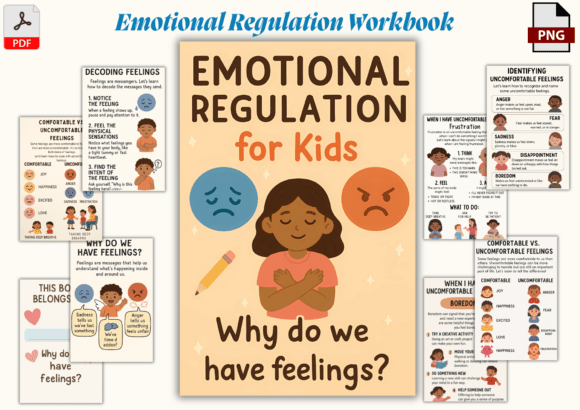
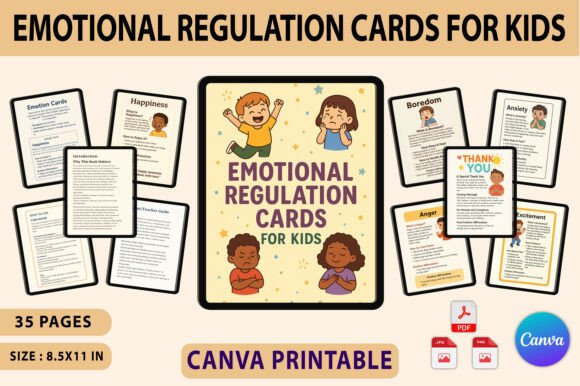
At its core, the Emotional Regulation Cards for Kids is a hands-on toolkit that supports emotional literacy—the ability to identify feelings, understand their causes, and choose healthy responses. Each card focuses on a common emotion—like excitement, frustration, shyness, or disappointment—with simple language, friendly illustrations, and age-appropriate strategies. A card for “anger,” for example, doesn’t just say “it’s okay to feel angry.” It offers three concrete options: take five slow breaths, squeeze a stress ball, or draw what the feeling looks like. That specificity matters—it turns abstract advice into real action.
What sets this resource apart is how it balances structure with flexibility. The 35 editable templates let adults adapt visuals, wording, or routines without starting from scratch. Whether you’re a teacher printing a class set, a therapist customizing for a child’s sensory needs, or a parent adding family-specific affirmations, the Canva-editable files make personalization effortless.
Where These Cards Fit Into Real Life
You don’t need a lesson plan or special training to begin using the Emotional Regulation Cards for Kids. Many families start small: choosing one “feeling of the day” during breakfast, placing the corresponding card on the fridge, and practicing its breathing exercise before school. In classrooms, educators use the Feelings Chart as a morning check-in—students place a magnet or sticker next to how they’re feeling, sparking gentle conversation without pressure.
Therapists appreciate the built-in scaffolding: the Role Play Game helps kids rehearse tough moments (like asking to join a game or handling a disagreement), while the Draw Your Mood activity gives nonverbal or hesitant children another way to communicate. Even digital creators and small business owners use these cards—some embed printable versions into parenting courses, others feature them in calm-down corner kits sold online.
More Than Just “Calm-Down Tools”
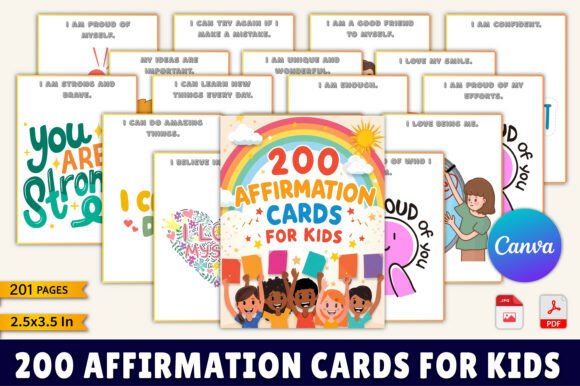
While many resources focus only on managing big emotions *after* they flare up, the Emotional Regulation Cards for Kids builds capacity over time. The Positive Affirmations aren’t generic slogans—they’re grounded in developmental psychology. Phrases like “My feelings help me know what I need” or “It’s okay to pause before I speak” reinforce agency, not compliance. Paired with the Parent & Teacher Guide, they help adults shift from problem-solving (“Stop crying!”) to co-regulating (“Let’s breathe together until your body feels steady again”).
This subtle but important difference supports long-term resilience. Children who regularly practice naming emotions and trying small regulation tools become more confident navigating uncertainty—not just in childhood, but later in friendships, academics, and even digital spaces where emotional cues are harder to read.
Practical Tips for Getting Started
If you’re new to emotional regulation tools, start with just two or three cards—not the full set. Pick emotions your child or students experience often: maybe “frustration” during homework time or “nervousness” before presentations. Keep them visible and accessible: on a ring, taped to a mirror, or tucked into a lunchbox.
The Daily Usage Tips included guide you through weaving practice into existing routines—no extra time required. Try pairing the Count to 10 Game with toothbrushing, or use the Breathing Exercise card as a transition between screen time and dinner. Consistency beats intensity: two minutes a day builds more neural pathways than one long session once a week.
Things to Keep in Mind
These cards work best when paired with warmth and patience—not as a fix, but as a companion. Some children may resist at first, especially if they associate “talking about feelings” with being corrected or judged. That’s normal. Let them flip through cards without expectation. Ask open questions: “Which one looks most like how you felt when your tower fell?” rather than “How are you feeling right now?”
Also remember: emotional regulation isn’t about eliminating big feelings. It’s about building trust—in yourself, in your body, and in the people around you. The closing Thank You Page gently reinforces that truth: all feelings are valid, temporary, and manageable with practice.
Who Benefits Most—and How
Educators use these cards to reduce classroom disruptions by addressing root causes—not just behaviors. Parents find them especially helpful during transitions: moving homes, welcoming a sibling, or returning to school after breaks. Therapists integrate them into play-based sessions for neurodivergent children who thrive with visual, tactile input. Bloggers and course creators adapt the designs for digital downloads, social media carousels, or printable bundles—because emotionally grounded kids mean calmer homes, more engaged learners, and stronger relationships across the board.
Whether you're supporting one child or fifty, whether you're working solo or part of a team, the Emotional Regulation Cards for Kids meets you with clarity, compassion, and quiet confidence—just like the skills it helps grow.