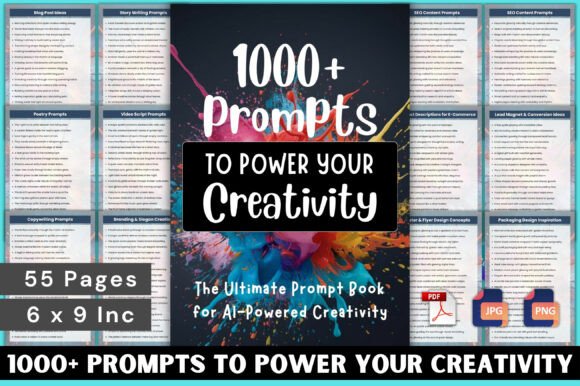
🎨1000 Prompts to Power Your Creativity
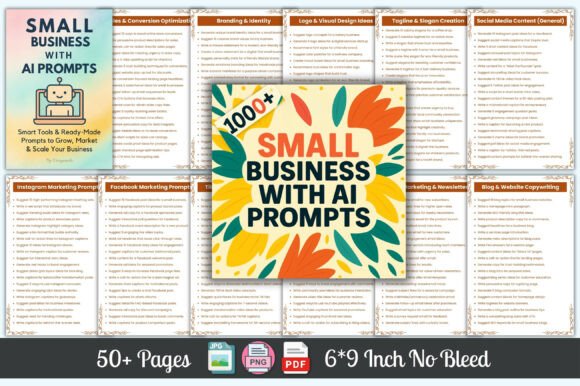
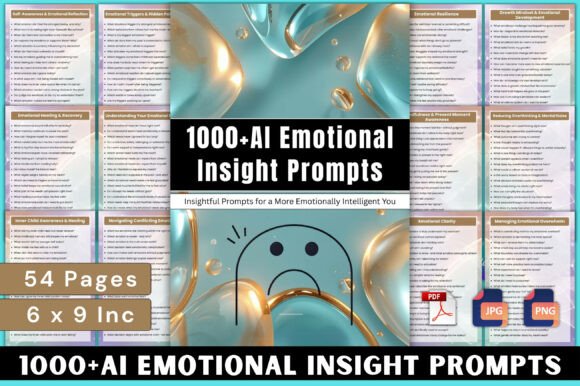
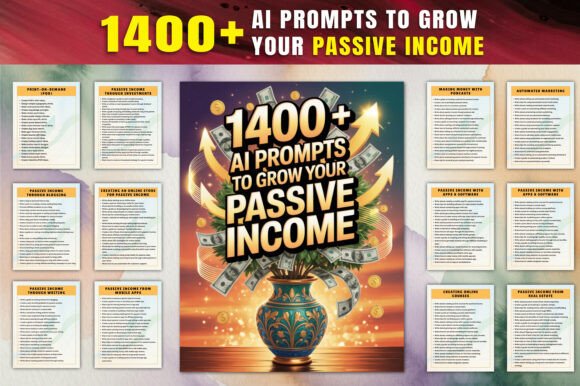
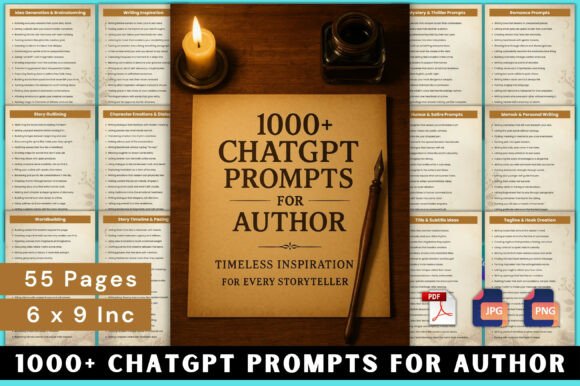
Staring at a blank page isn’t a sign of failure—it’s the starting line. And 🎨1000 Prompts to Power Your Creativity is your reliable sprint partner. This isn’t another abstract “think outside the box” guide. It’s a tightly curated, 55-page PDF toolkit—practical, organized, and built for real-world use across writing, visual design, marketing, education, and AI-assisted creation.
Each prompt is tested for clarity and adaptability—not just to spark an idea, but to launch a draft, a sketch, a script, or a strategy. Whether you’re drafting a newsletter for a local bakery, storyboarding a TikTok series for a nonprofit, or refining brand voice for a SaaS startup, these prompts meet you where you are.
Why These Prompts Work Where Others Fall Short
Most prompt collections either drown you in vagueness (“Write something inspiring”) or lock you into rigid formats. 🎨1000 Prompts to Power Your Creativity avoids both traps by organizing prompts thematically—not by genre alone, but by creative *function*. You’ll find sections like:
- “Reframe & Repurpose” — Turn customer complaints into product feature stories, or transform dry data into vivid analogies.
- “Audience First” — Prompts calibrated for specific roles: a teacher explaining climate science to 10-year-olds, a UX writer simplifying error messages, or a therapist crafting journaling questions for burnout recovery.
- “Medium Shift” — Take one core idea and generate variations for Instagram carousels, email subject lines, podcast intros, and alt-text descriptions—all from the same seed prompt.
This structure supports deliberate practice—not random inspiration. You don’t need to “get creative.” You need to *act* creatively—and that starts with a clear, actionable nudge.
Real Uses Across Real Roles
Writers & Bloggers: Use the “Voice Swap” prompts to rewrite a technical blog post as if it were narrated by a curious high-school student—or a skeptical industry veteran. This builds versatility and audience empathy fast. Try prompt #387: “Explain [topic] using only metaphors from cooking. Then rewrite it using metaphors from urban transit.”
Designers & Illustrators: The “Constraint-Driven Visuals” section gives you precise creative boundaries—like “Design a logo for a zero-waste bookstore using only three shapes and one font weight,” or “Sketch five thumbnail concepts for a mental health app icon—each must include negative space as meaning, not decoration.” Constraints fuel originality; these prompts make them productive, not limiting.
Marketers & Small Business Owners: Skip generic social media calendars. Instead, use the “Story Arc Starter” prompts to build authentic campaign narratives. For example: “Describe your product’s ‘before’ state—not as a problem, but as a quiet habit your customer doesn’t question… then show the first small moment they noticed it could be different.” That’s how you build resonance—not reach.
Educators & Trainers: Pull from the “Question Layering” prompts to scaffold critical thinking. One prompt might ask: “List three facts about photosynthesis. Now list two assumptions behind those facts. Finally, write one question that challenges the most widely accepted assumption.” It’s ready-to-use, classroom-tested, and adaptable for remote or in-person delivery.
How to Use It Without Overwhelm
Don’t read it cover to cover. Treat it like a workshop drawer—not a textbook. Here’s how creators actually use it:
- Pick one section per week. If you’re designing landing pages, focus on the “UX Microcopy” prompts for seven days. Apply just one per project—even if it’s just rewriting the CTA button text three ways before choosing.
- Combine with your tools. Paste a prompt into your AI assistant (e.g., “Rewrite this product description using prompt #142: ‘Describe it as if it’s been passed down through three generations of makers’”). Then edit the output—not to polish AI text, but to inject your judgment, specificity, and voice.
- Keep a “Prompt + Result” log. Next to each prompt you try, jot down: What medium did you use? Who was the audience? What surprised you about the outcome? Over time, patterns emerge—like which prompts reliably generate strong headlines, or which ones help you break out of repetitive visual styles.
This isn’t about generating more content. It’s about generating *better decisions*—faster, with more intention.
For Teams and Collaborative Work
Teams often stall not from lack of ideas, but from mismatched assumptions about what “good” looks like. 🎨1000 Prompts to Power Your Creativity serves as a shared language. Run a 15-minute team huddle using prompt #621: “List three things this project *must not* communicate—and why.” That surfaces hidden expectations before wireframes or copy drafts exist.
Design agencies use the “Brand Voice Alignment” prompts to calibrate tone across writers, designers, and developers. Marketing teams use the “Platform Pivot” prompts to translate one campaign concept across LinkedIn, email, and short-form video—without diluting the core message.
What Makes the Format Effective
The 6 x 9 inch layout isn’t arbitrary. It’s sized for desk reference—easy to open beside your laptop or sketchbook. The clean typography and generous white space reduce cognitive load. No decorative flourishes distract from the work. And because it’s delivered as a printable PDF (plus PNG/JPG assets), you can annotate, highlight, or cut out prompts to pin to your wall—no screen fatigue required.
It’s also intentionally concise: 55 pages means no filler, no repetition, no “bonus” content that duplicates what’s already working. Every prompt earns its place.
Your Next Step Isn’t “Be Creative”—It’s “Try One Prompt”
You don’t need motivation. You need momentum. Open the file. Scroll to the “Quick Start” section (page 3). Pick the first prompt that feels slightly uncomfortable—not too easy, not impossible. Set a timer for 7 minutes. Write, sketch, record, or code. Don’t judge. Just respond.
That’s how creative confidence grows: not in grand declarations, but in repeated, low-stakes action. 🎨1000 Prompts to Power Your Creativity removes the friction between intention and output. It won’t write your book, design your logo, or grow your audience—but it will help you do those things, clearly, consistently, and with more of your own voice in them.
Start today. Not when you’re “ready.” Not after you’ve cleared your inbox. Right now—with one prompt, one minute, and one honest attempt.