2026 Complete House Management Binder
Imagine opening your kitchen drawer and pulling out a single, thoughtfully designed binder that holds every piece of information you need to run your household—not as a chore, but as a calm, coordinated rhythm. That’s the quiet power of the 2026 Complete House Management Binder. It’s not another generic planner or digital app asking you to toggle between tabs and notifications. It’s a tactile, intentional system built for real life: for parents juggling school drop-offs and grocery runs, freelancers balancing client deadlines with home repairs, educators managing households while planning lessons, and small business owners who need clarity at home to stay focused at work.
This binder works because it meets households where they are—messy, dynamic, and full of overlapping responsibilities. Instead of forcing your life into rigid categories, it offers flexible, interlinked tools. The 2026 calendar isn’t just dates; each monthly spread includes dedicated space for recurring reminders (like HVAC filter changes or pet vaccinations), family appointments, and even quick notes about what worked—or didn’t—in last month’s meal plan. That subtle design choice means you’re not just scheduling time—you’re learning from patterns across months.
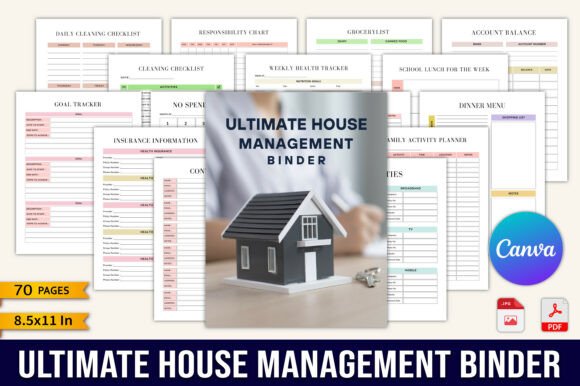
Take home maintenance: many people know they *should* clean gutters twice a year or replace smoke detector batteries—but forget when, or assume it’s “someone else’s job.” The 2026 Complete House Management Binder solves this with layered tracking. Indoor tasks (vacuuming baseboards, dusting light fixtures) live alongside outdoor ones (lawn aerating, deck sealing), and both tie into seasonal checklists. You can pencil in “March: inspect patio furniture cushions” and cross it off when done—no more mental load or last-minute panic before summer guests arrive.
Budgeting feels less daunting here, too. The expense planner doesn’t demand spreadsheet fluency—it uses clear, labeled columns for income, fixed bills, variable spending, and savings goals. A teacher on a 10-month contract might use the “income timing” section to map out summer cash flow, while a freelancer could track project deposits alongside quarterly tax estimates. Because it’s printed on standard 8.5×11 paper, you can add sticky notes, highlight overdue utilities, or tape in a receipt for that new water heater—all without losing context.
Utility subscriptions are a silent source of stress: forgotten renewals, duplicate charges, or expired passwords for smart-home services. The dedicated log pages help you record provider names, account numbers, renewal dates, and even customer service notes (“Call after 2 p.m. for faster service”). One small-business owner reported cutting her monthly utility review time from 45 minutes to under 10—just by having all details visible at once, in chronological order.
Family coordination gets tangible support, too. The activity planner goes beyond “Tuesday: soccer.” It includes meal prep timelines, school lunch ideas (with allergy-friendly icons), and shared event calendars where teens can add their own commitments. For blended families or multi-generational homes, those unified pages reduce miscommunication—no more double-booking the minivan or missing a grandparent’s birthday dinner.
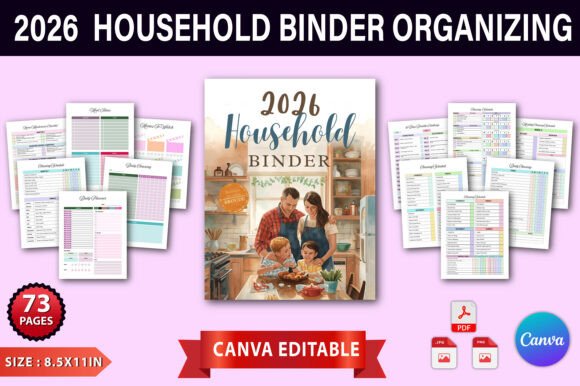
The cleaning checklists avoid overwhelm by distinguishing daily habits (“wipe bathroom counters”), weekly routines (“mop kitchen floor”), and seasonal deep cleans (“wash windows inside/out”). This tiered approach helps users build consistency without burnout—especially helpful for neurodivergent adults or caregivers managing complex schedules. Likewise, the meal and grocery planner links menus directly to pantry and freezer inventories, reducing food waste and last-minute takeout decisions. Try planning three dinners Sunday evening, then checking what’s already stocked before adding items to your list.
Goal habit trackers stand out because they’re tied to real-life rhythms—not abstract resolutions. You’re not just logging “drink more water”; you’re noting how hydration affects your afternoon focus during remote work sessions, or whether consistent bedtime routines improve your child’s morning readiness. These aren’t journal prompts—they’re observational tools that help you refine habits based on evidence, not intention alone.
For events—whether a weekend camping trip, a milestone birthday party, or a basement renovation—the project planning pages provide structure without rigidity. There’s space for vendor contacts, budget allocations, supply checklists, and even “lessons learned” reflections afterward. A blogger used these pages to coordinate her first in-person workshop, tracking everything from AV equipment rentals to dietary notes for attendees—and reused the same layout template for her next family vacation.
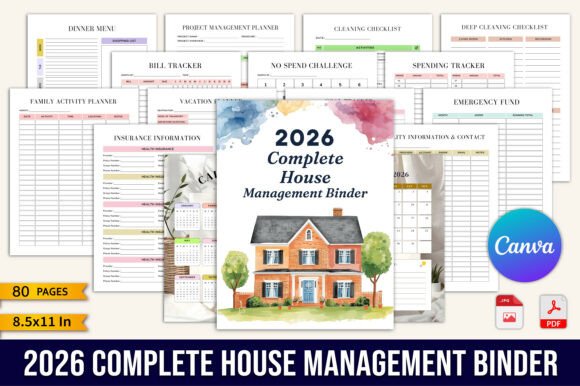
The included Canva access adds practical versatility. With 80 editable templates—formatted for standard 8.5×11 printing—you can personalize covers, update fonts, or adapt layouts for specific needs (e.g., swapping “school lunches” for “meal prep for dialysis diet”). No design skills needed, and no subscription required: download, edit, print, and go. The PDF files are optimized for crisp text and clean lines, so handwritten notes stay legible, and printed checklists hold up through repeated use.
That said, this binder works best for people who value physical organization and want to minimize screen time at home. If you rely heavily on automated bill pay, shared cloud calendars, or voice-activated reminders, the 2026 Complete House Management Binder complements—not replaces—those tools. Think of it as your central reference point: the place you open first to get oriented, then sync digitally as needed.
It’s especially useful during transitions—starting a new job, moving houses, welcoming a baby, or returning to work after leave. During those periods, cognitive bandwidth is limited. Having one place to track pediatrician visits, utility transfers, and meal prep for recovery meals reduces decision fatigue significantly.
Finally, the binder supports long-term resilience. Insurance and bank info pages aren’t just for emergencies—they’re part of proactive stewardship. Recording policy numbers, agent contacts, and coverage limits helps families act quickly after unexpected events. One educator updated her binder after a storm damaged her roof, using pre-filled pages to file claims faster and avoid missing documentation deadlines.
You don’t need perfection to benefit from the 2026 Complete House Management Binder. You just need a willingness to try one less thing scattered across sticky notes, text threads, or browser tabs. Its strength lies in cohesion—not complexity. When your home systems align, even small wins compound: fewer missed deadlines, less duplicated effort, more margin for rest or creativity. And that’s not just organization. That’s sustainable living, one intentional page at a time.