The Ultimate House Management Binder: Your Home’s Command Center, Simplified
Running a household isn’t just about keeping the lights on—it’s about remembering who’s picking up the kids on Wednesdays, when the HVAC filter needs replacing, whether you’ve renewed your renter’s insurance, and why there are three unopened jars of tahini in the pantry. It’s mental load, scattered sticky notes, overlapping Google Calendars, and that nagging feeling something important slipped through the cracks. Enter The Ultimate House Management Binder: not another flashy app or subscription service—but a thoughtfully designed, printable, physical (or digital) home organization system built for real life.
More Than Just Paper—It’s Intentional Infrastructure
This isn’t a generic planner slapped together with pretty fonts. The Ultimate House Management Binder is architected around how households actually function—not how productivity gurus imagine they should. It combines structure with flexibility, so whether you’re managing a two-person apartment, a homeschooling family of six, or a solo professional juggling remote work and home upkeep, it adapts without demanding perfection.
Think of it as your home’s operating system: one central place where logistics, finance, wellness, maintenance, and daily rhythm converge. No more toggling between 12 tabs, digging through email archives for utility login details, or frantically texting your partner mid-grocery run to confirm if soy milk is on the list. Everything lives where it belongs—and where you can find it fast.
What Makes It Work? Real-World Functionality, Not Just Aesthetics
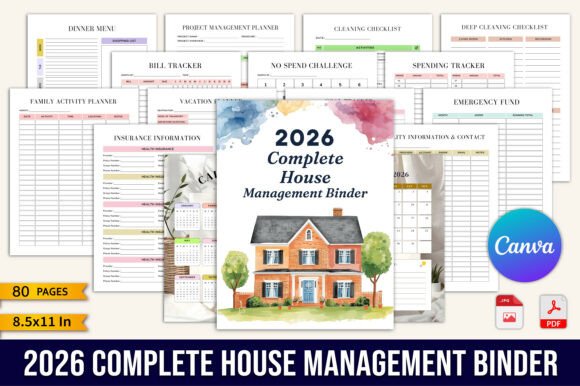
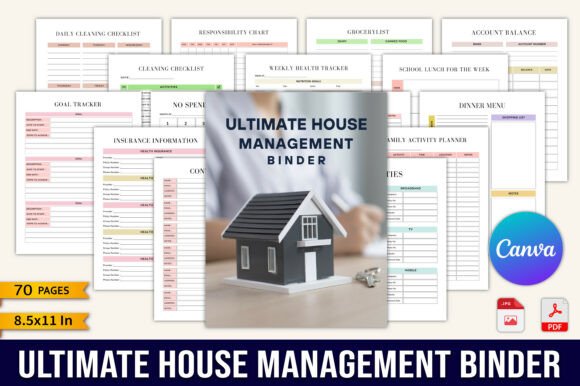
Let’s cut past the buzzwords. The strength of The Ultimate House Management Binder lies in its balance of breadth and usability. It doesn’t overwhelm with 50 trackers; instead, it offers 38 purpose-built tools, each solving a specific, recurring pain point:
- Budgeting that breathes: Monthly Family Budget + Income/Expense/Spending Trackers + Debt Payoff + Emergency Fund + 40-Week Saving Challenge—all designed to coexist. You’re not forced into rigid categories; you choose what to use, when.
- Maintenance that sticks: Home Maintenance + Indoor Maintenance + Deep Cleaning + Daily Cleaning List + Pantry & Freezer Inventory. These aren’t vague reminders—they’re actionable checklists with seasonal cues and space to log dates, contractors, and warranty info.
- Food planning that reduces waste and decision fatigue: Dinner Menu + Favorite Meals + School Lunch Planner + Holiday Meal Planner + Reorder List + Grocery & Shopping Lists. Bonus? The Freezer Inventory sheet helps you spot that half-forgotten bag of frozen blueberries before they turn to ice crystals.
- Life admin, finally tamed: Contact List + Utilities + Bank Accounts + Insurance Info + Bill Tracker + Subscriptions + Emergency Contacts. No more frantic Googling “who do I call for sewer line issues?” at 7 p.m. on a Sunday.
- Wellness and intentionality woven in: Health Tracker Weekly + Exercise Tracker + Goal Tracker + No-Spend Challenge + Responsibility Chart. Because managing a home includes managing energy, boundaries, and shared accountability—not just chores.
Each section is printable, tabbed, and designed to be used—not filed away. Many users start with just 3–5 sections (e.g., Bill Tracker, Monthly Budget, and Daily Cleaning List), then gradually add others as rhythms settle. That’s by design: adoption isn’t all-or-nothing.
Why Physical (or Print-First) Still Wins for Household Systems
In an age of cloud sync and AI assistants, choosing a printable binder might seem counterintuitive. But consider this: your phone buzzes constantly. Your laptop opens to 17 browser windows. Your smart speaker can’t show you last month’s electric bill *and* your kid’s dentist appointment *and* the contractor’s license number—all at once, without voice commands, scrolling, or permissions.
The Ultimate House Management Binder removes friction. Flip to “Utilities,” jot down the meter reading, and circle the due date. Open “Vacation Planner,” map out flights, packing lists, and pet-sitter instructions side-by-side. Hand the “Responsibility Chart” to your teens and watch ownership grow—not because it’s assigned, but because it’s visible, tangible, and updated weekly.
And yes—you *can* go digital. Print the pages, then scan them into a tablet with a stylus. Or use PDF annotation tools to fill in trackers on screen. The system supports both. But its core philosophy remains: reduce cognitive switching, eliminate search time, and make information instantly scannable—not buried in folders or behind passwords.
Fitting Into Modern Lifestyles—Without Asking You to Change Who You Are
This isn’t a system for “supermoms” or minimalist influencers. It’s built for people who’ve tried apps and abandoned them after two weeks. For those who lose receipts in coat pockets. For neurodivergent adults who thrive with visual schedules and clear boundaries. For retirees simplifying their homes. For blended families aligning routines across two households.
Take meal planning: Instead of forcing a rigid “Sunday prep day,” the Ultimate House Management Binder includes flexible tools like the “Dinner Menu” (a rotating 2-week grid), “Favorite Meals” (with notes on prep time and kid approval rating), and “School Lunch Planner” (with space for allergies, leftovers, and snack swaps). It meets you where you are—not where some idealized version of domestic efficiency says you should be.
Or consider financial clarity: The Debt Tracker doesn’t shame—it shows payoff timelines visually. The Gift Budget prevents holiday overspending *before* December hits. The Subscription Tracker reveals that $14.99 “wellness app” you haven’t opened since March. These aren’t punitive tools. They’re mirrors—helping you see patterns, not just fix symptoms.
Getting Started Without Overwhelm
You don’t need to print, bind, and tab all 38 sections on Day One. Start small:
- Pick your “anchor section”: What’s causing the most daily friction right now? Is it forgetting bills? Scrolling endlessly for dinner ideas? Losing track of home repairs? Choose *one* tracker from The Ultimate House Management Binder that solves that.
- Print just that page—or three related ones. Example: Bill Tracker + Bill Checklist + Expense Tracker. Keep them in a simple folder or binder pocket.
- Use it consistently for 10 days. Update it after paying a bill. Cross off groceries as you buy them. Note when the dishwasher service rep called back.
- Notice what feels easy—and what doesn’t. Did you forget to update the tracker? Maybe add a sticky note reminder on your fridge. Did the layout confuse you? Try highlighting key columns next time.
That’s how habits form. Not with grand launches, but quiet, repeated acts of alignment between your system and your reality.
Who Benefits Most From This System?
While anyone seeking order can benefit, The Ultimate House Management Binder shines brightest for:
- Busy families juggling school drop-offs, extracurriculars, meal prep, and aging parent care;
- Homemakers and stay-at-home parents whose labor is often invisible—and whose systems prevent burnout;
- Remote workers sharing space with partners, roommates, or children and needing clear home/work boundaries;
- New homeowners navigating first-time maintenance, insurance claims, and neighborhood resources;
- Adults reorganizing post-divorce, post-move, or post-loss, rebuilding stability one practical step at a time.
It’s not about doing more—it’s about doing less *rework*, less remembering, less apologizing for missed deadlines. It’s about returning time, attention, and calm to the people who matter most.
At its heart, The Ultimate House Management Binder isn’t about control. It’s about care—care for your space, your finances, your health, your relationships, and yourself. When the little things have a place, the big things get room to breathe.