2026 Wellness Journal for Women
Wellness isn’t a trend—it’s infrastructure. For women navigating demanding roles as professionals, creators, educators, small business owners, or caregivers, sustainable performance depends less on hustle and more on deliberate alignment: between energy and effort, intention and action, self-awareness and decision-making. The 2026 Wellness Journal for Women is not another decorative planner. It’s a structured, evidence-informed tool designed to support strategic self-management—grounded in behavioral psychology, habit science, and clinical wellness frameworks.
Why This Journal Fits Real Work, Not Just Aspirations
Most planning tools assume time is abundant and motivation is constant. That assumption fails under real-world pressure—when deadlines collide with caregiving, when creative blocks meet burnout signals, or when long-term health goals get deferred indefinitely. The 2026 Wellness Journal for Women works because it meets users where they are: not at the start of an idealized journey, but mid-stride—in meetings, between classes, during school pickups, or after a 10 p.m. client call.
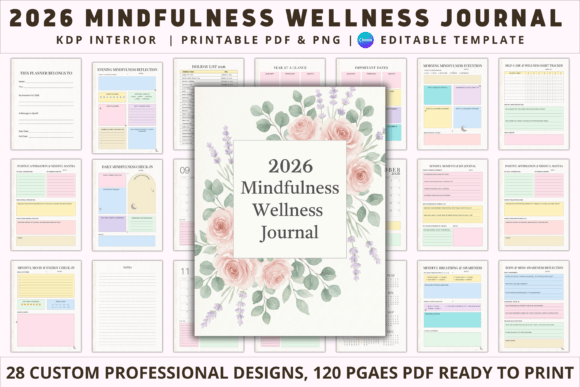
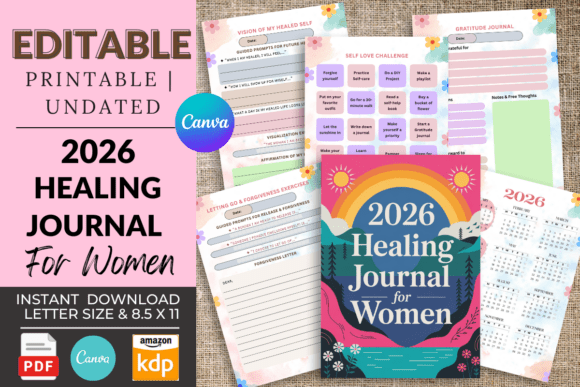
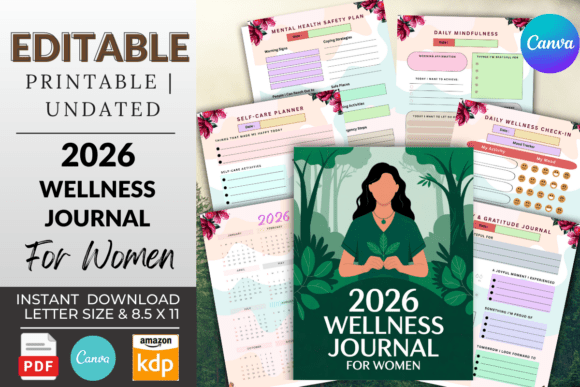
Its 120-page no-bleed format eliminates distraction and supports consistency. Unlike digital apps that compete for attention, this journal creates a tactile, low-friction space to pause—not to escape, but to recalibrate. Each section serves a functional purpose tied to measurable outcomes: the Daily Wellness Check-In surfaces patterns before they become crises; the Mental Health Safety Plan isn’t theoretical—it names concrete coping strategies, trusted contacts, and physical spaces where calm is accessible. This isn’t journaling for catharsis alone. It’s data collection for self-leadership.
Strategic Use Cases Across Roles
How you use the 2026 Wellness Journal for Women depends less on your title and more on your current leverage points. Consider these grounded applications:
- Freelancers & creators: Track energy alongside output. Note which projects energize versus deplete—even if both pay equally. Over time, this informs pricing, scope boundaries, and client selection—not just workload management.
- Educators & healthcare professionals: Use the Weekly Reflection Reset to identify emotional labor spikes—then align administrative tasks or prep time with higher-energy windows. This preserves capacity for students or patients without relying on willpower alone.
- Small business owners: Cross-reference your Nutrition Hydration Tracker and Movement Exercise Log with weekly revenue or conversion metrics. You may discover that consistent morning movement correlates with sharper negotiation outcomes—or that hydration lapses precede communication missteps in team meetings.
- Marketers & content strategists: The Joy Gratitude Journal and Affirmations Positive Self-Talk sections build resilience against algorithmic volatility and campaign fatigue. Documenting micro-wins (“sent pitch that landed a feature,” “revised messaging based on authentic feedback”) reinforces agency in unpredictable environments.
Timing Matters More Than Frequency
You don’t need to fill every page daily to benefit from the 2026 Wellness Journal for Women. In fact, overcommitting early often triggers abandonment. Instead, begin with one anchor practice: choose the single section most likely to yield immediate insight into a current bottleneck.
For example: if decision fatigue is eroding your confidence in hiring or product launches, start with the Daily Mindfulness Pages. Spend two minutes each morning identifying one intention—not a goal, but a quality of presence you want to carry into your next high-stakes interaction (e.g., “listen without rehearsing my reply”). At day’s end, note one moment you embodied it—and one where you didn’t. No judgment. Just observation. Within 10 days, you’ll have tangible data about where your attention defaults—and where to intervene.
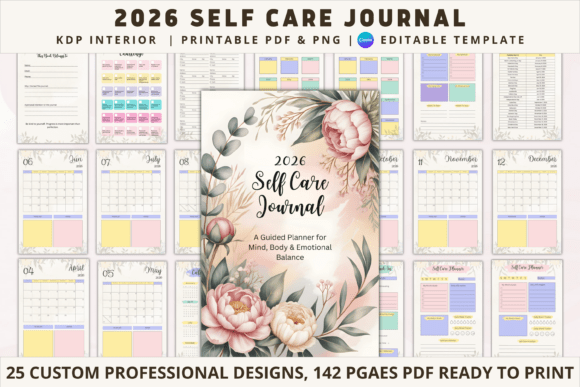
Similarly, the Self-Care Planner isn’t about adding “spa days.” It’s about auditing what actually restores your capacity to think clearly, connect authentically, or act decisively—and then scheduling those acts like non-negotiable operational priorities. If reviewing contracts recharges you more than scrolling Instagram, that belongs in the planner—not as a luxury, but as infrastructure.
Risks of Using It Without Context
The 2026 Wellness Journal for Women becomes counterproductive when used passively—as a checklist rather than a diagnostic instrument. Tracking water intake while ignoring sleep debt, logging workouts while neglecting recovery, or writing affirmations while tolerating chronic disrespect in relationships creates cognitive dissonance, not clarity.
Without clear intent, journaling can reinforce perfectionism: “I missed three days—so I’ve failed.” But the design assumes human variability. The Year-at-a-Glance Calendar includes space to mark not just goals, but thresholds—what does “enough” look like this quarter? What’s the minimum viable self-care standard when launching a course or managing a family illness?
Also consider context: if you’re in active crisis—acute anxiety, grief, or medical instability—the journal’s Mental Health Safety Plan is valuable, but it’s not a substitute for clinical support. Use it to clarify what help looks like *for you*, then pair it with professional guidance.
Long-Term Value: From Tracking to Translation
After 90 days, revisit your entries—not to critique consistency, but to spot inflection points. Did a shift in morning affirmations correlate with increased boundary-setting? Did tracking meals reveal how certain foods impact afternoon focus during client calls? This is where the 2026 Wellness Journal for Women transitions from record-keeping to strategy refinement.
That insight becomes operational intelligence. A blogger notices her most resonant posts are written after 20 minutes of mindful breathing—so she builds that into her editorial calendar. A therapist realizes clients respond better when she logs her own movement first thing—so she integrates it into her pre-session routine. These aren’t vague “wellness wins.” They’re system-level adjustments rooted in personal evidence.
Over six months, the journal also reveals how your definition of “wellness” evolves. Early entries might emphasize productivity; later ones prioritize presence, discernment, or rest as resistance. That evolution matters—not as proof of progress, but as calibration. It tells you when to adjust goals, renegotiate commitments, or shift your brand narrative toward deeper authenticity.
Intentional Use Starts With One Question
Before opening the 2026 Wellness Journal for Women, ask yourself: What decision am I avoiding—or making poorly—because I lack clarity about my own capacity?
Is it saying no to a project that looks impressive but drains your creative reserves? Is it delaying a conversation with a team member because you’re too exhausted to hold space? Is it postponing a health screening because “there’s no time”—while ignoring how fatigue is costing you in missed opportunities or misaligned partnerships?
The journal doesn’t solve those problems. But it gives you a neutral, repeatable way to gather data about the conditions under which you operate best—and worst. That data sharpens judgment. It improves forecasting. It strengthens negotiation—both with others and with yourself.
In 2026, wellness won’t be measured in steps or servings. It will be measured in alignment: between what you do, who you are, and what you protect. The 2026 Wellness Journal for Women is one precise tool to make that alignment visible—and actionable.