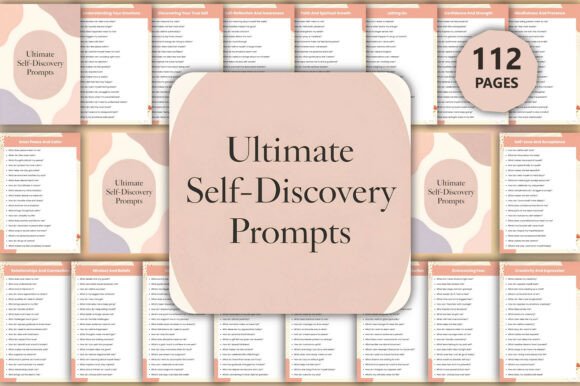
The Ultimate Self-Discovery Prompts Book: A Practical Guide for Intentional Inner Work
Self-discovery isn’t a destination—it’s a practice. And like any meaningful practice, it benefits from structure, intention, and thoughtful design. The Ultimate Self-Discovery Prompts Book is built around that principle: not as a prescriptive roadmap, but as a responsive, adaptable companion for sustained reflection. It’s a guided journal with depth—2100 prompts distributed across thematic sections—not just filler questions, but layered invitations to examine assumptions, trace emotional patterns, revisit formative experiences, and clarify what truly matters.
What Sets This Journal Apart From Generic Prompt Collections
Many journals offer 30–100 prompts scattered across broad categories like “gratitude” or “goals.” The Ultimate Self-Discovery Prompts Book distinguishes itself through density, sequencing, and integration. The 2100 prompts aren’t random; they’re grouped into intentional arcs—some invite gentle observation (“When did you last feel completely absorbed in something? What were you doing?”), while others build toward insight (“What recurring theme shows up in your strongest memories—and how might that reflect an unmet need or core value?”). This progression supports cumulative learning rather than isolated insights.
Equally important is how the prompts interact with other tools in the book. Affirmation and gratitude pages aren’t tacked on—they follow reflection prompts that surface resistance, doubt, or self-criticism, making affirmations feel grounded rather than aspirational. Mood trackers appear alongside emotion-focused prompts, encouraging users to notice correlations between inner states and external conditions (e.g., energy dips after certain types of interactions, or calm rising during specific routines). That kind of embedded design reduces friction between noticing and acting.
Format Flexibility: Digital, Printable, and Customizable
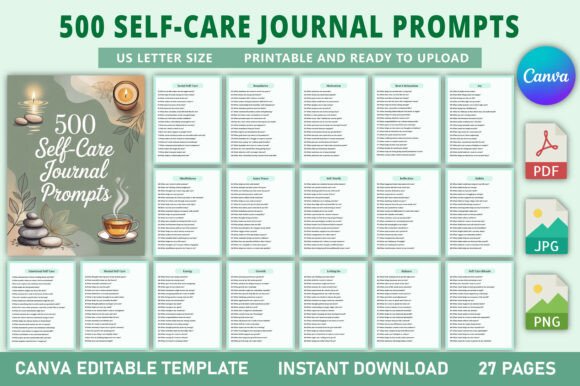
Unlike static printed journals or apps with rigid interfaces, The Ultimate Self-Discovery Prompts Book ships with both editable Canva access and high-resolution PDFs. This means users can adjust fonts, spacing, or layout before printing—or adapt pages for screen-based journaling using note-taking apps that support PDF annotation. For someone who prefers handwriting but dislikes cramped lines, the Canva link allows expanding margins. For another who journals on a tablet, the PDF’s clean spacing and minimal design translate well to stylus use. That dual-format approach accommodates real-world habits instead of forcing adaptation to a fixed medium.
Comparing Approaches: Guided vs. Open-Ended vs. Therapeutic Tools
People exploring self-discovery resources often weigh three broad categories: open-ended journals (blank notebooks), highly structured therapeutic workbooks (often clinically oriented), and guided prompt journals like this one. Each has tradeoffs.
- Blank journals offer total freedom—but without scaffolding, many users report inconsistent engagement, vague entries, or early abandonment. Without cues about *what* to explore or *how deeply*, reflection can stay superficial.
- Clinical workbooks (e.g., CBT or DBT journals) excel for targeted challenges like anxiety or emotional regulation, but may feel overly technical or pathologizing when used for general growth. Their focus is often symptom reduction—not identity exploration or values alignment.
- The Ultimate Self-Discovery Prompts Book sits deliberately between them: guided enough to sustain momentum and deepen inquiry, yet flexible enough to honor individual pace and emphasis. It doesn’t assume pathology, nor does it leave users adrift. It meets people where they are—whether that’s rebuilding after burnout, navigating a career transition, or simply wanting to understand recurring relationship patterns.
Realistic Use Cases—and When It May Fall Short
This journal shines in contexts where consistency and curiosity matter more than urgency. Consider:
- A teacher taking a sabbatical who wants to reconnect with creative impulses before returning to the classroom.
- A new parent reflecting on shifting identity, boundaries, and personal needs amid caregiving demands.
- A mid-career professional evaluating whether their current role aligns with long-term values—not just skills or salary.
In each case, the volume and variety of prompts allow revisiting themes over weeks or months, revealing subtle shifts in perspective. The mood trackers help spot gradual changes—like increased patience after practicing boundary-setting affirmations, or renewed interest in hobbies once associated with childhood joy.
That said, The Ultimate Self-Discovery Prompts Book isn’t optimized for acute distress or crisis support. If someone is experiencing overwhelming anxiety, depression, or trauma symptoms, structured therapeutic tools or professional guidance would be more appropriate first steps. Similarly, readers seeking step-by-step skill-building (e.g., active listening drills, conflict resolution scripts) won’t find those here—the focus remains inward: understanding, not training.
Design Choices That Support Sustainable Practice
Minimalism in this context isn’t aesthetic preference—it’s functional. The calming, uncluttered layout reduces cognitive load. There’s no pressure to “fill the page,” no decorative borders competing for attention, no forced daily checkboxes that breed guilt when missed. Instead, open journaling sections encourage doodling, bullet points, or fragmented thoughts—validating that insight rarely arrives in polished paragraphs.
The inclusion of “creative expression space” acknowledges that not all processing is verbal. Some users sketch symbols representing emotions; others map relationships visually. That flexibility lowers the barrier to entry, especially for those who associate journaling with performance (“I must write beautifully”) rather than presence (“I’m showing up with honesty”).
How It Compares With App-Based Alternatives
Digital journaling apps offer searchability, reminders, and analytics—but often at the cost of privacy, continuity, and tactile engagement. Exporting data can be difficult; subscription models may limit access over time; and algorithm-driven prompts risk repetition or irrelevance. The Ultimate Self-Discovery Prompts Book, by contrast, is owned outright. Users control where and how it’s used—no logins, no data harvesting, no feature rollouts that change the experience. For those wary of digital dependency or preferring analog rhythm, that autonomy is significant.
Yet apps do offer advantages: voice-to-text for mobility, automatic backups, and tagging systems for cross-referencing themes. Someone managing chronic fatigue, for example, might benefit more from dictating reflections than writing by hand. In those cases, a hybrid approach—using the book for deep weekly reflection and an app for quick daily notes—can complement rather than replace.
Making a Thoughtful Choice
Deciding whether The Ultimate Self-Discovery Prompts Book fits your needs comes down to two practical questions:
- Do you benefit from structure that invites depth—not just frequency? If yes, its layered prompts and integrated trackers provide scaffolding without rigidity.
- Do you value ownership, adaptability, and low-tech accessibility? If yes, the editable Canva access and print-ready PDFs support long-term, self-directed use.
It’s not the only path to self-awareness—but for readers prioritizing reflective consistency, thematic breadth, and format flexibility, it offers uncommon coherence. It doesn’t promise transformation. It offers tools, space, and thoughtful design—so you can do the work that only you can do.